Free vs paid VPN: compare security, speed, and privacy.
🔐 Free vs Paid VPN: Which One Should You Use?
Many people install a VPN to stay safe online, especially on public WiFi. But one important question often gets ignored — should you use a free VPN or invest in a paid one?
While free VPNs may look convenient, they don’t always offer the level of protection you expect. In fact, some can even put your data at risk.
👉 So, how do you choose the right option? Let’s compare both in detail.
🧠 What is a VPN?
A VPN (Virtual Private Network) encrypts your internet connection and hides your online activity.
In simple terms:
👉 It protects your data from hackers and keeps your browsing private.
This is especially important when using public WiFi networks.
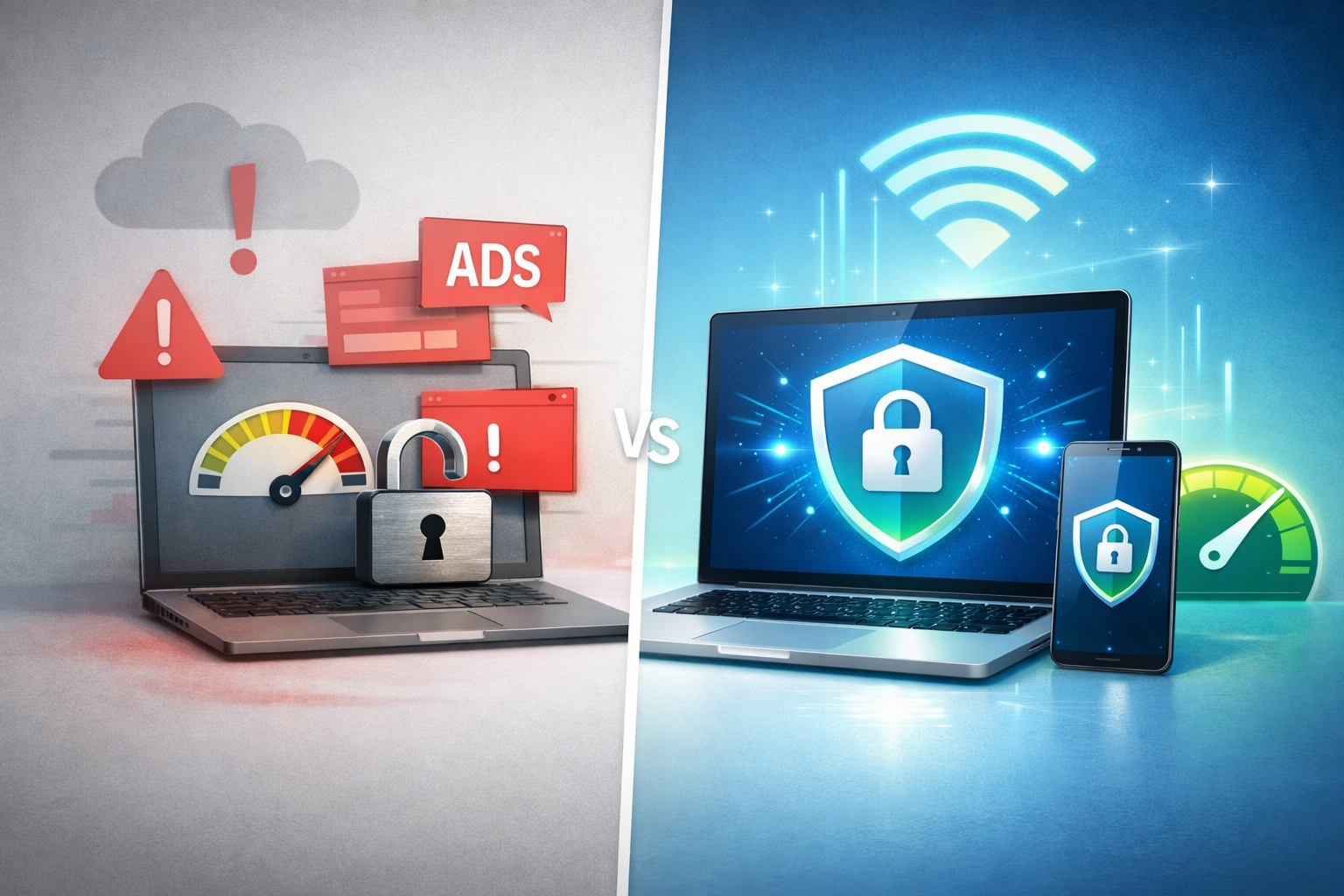
⚖️ Free VPN vs Paid VPN: Key Differences
| Feature | Free VPN | Paid VPN |
|---|---|---|
| Cost | Free | Monthly/Yearly |
| Security | Basic | Advanced encryption |
| Speed | Slow | Fast |
| Privacy | May log data | No-log policy |
| Ads | Yes | No |
| Reliability | Limited | Stable |
🆓 Free VPN: Pros and Cons
Free VPNs are popular because they don’t cost anything. For example, they can be useful for quick browsing or accessing basic content.
However, these services often come with limitations. Speed restrictions, ads, and limited server access are common issues.
More importantly, some free VPNs may track your activity. As a result, your privacy could be compromised instead of protected.
✅ Pros
- No cost
- Easy to use
- Good for basic browsing
❌ Cons
However, free VPNs come with serious limitations.
- Limited speed and bandwidth
- Ads and tracking
- Weak security
- Some log your data
👉 In some cases, free VPNs can be risky.
🚨 Important: Free VPNs can limit security and speed.
For real protection—especially on public WiFi—use a trusted premium VPN.
👉 See the best VPNs for public WiFi:
https://symnexus.com/best-vpn-for-public-wifi/
💳 Paid VPN: Pros and Cons
Paid VPNs are built for better performance and security. In addition, they provide faster speeds, reliable connections, and stronger encryption.
Most importantly, trusted paid VPNs follow strict no-log policies, ensuring your data remains private.
On the other hand, the only drawback is the cost.
👉 But in most cases, the added security makes it worth it.
✅ Pros
- Strong encryption
- Faster speed
- No ads
- Better privacy protection
- Reliable servers
❌ Cons
- Requires payment
🧠 Which One Should You Choose?
If you only browse casually, a free VPN might work.
However, if you care about:
- Privacy
- Security
- Safe public WiFi usage
👉 A paid VPN is the better choice.
🛡️ Why Paid VPN is Safer (IMPORTANT)
Free VPNs often need to make money somehow.
As a result, they may:
- Show ads
- Track your activity
- Sell data
👉 Paid VPNs, on the other hand, focus on security and privacy.
🚀 Best Choice for Public WiFi Users
If you use public WiFi regularly, you should avoid free VPNs.
👉 They may not fully protect your data.
🚨 Want real protection on public WiFi?
The safest option is to use a trusted premium VPN.
Add this line somewhere natural:
If you often use public WiFi, you should first understand the risks involved.
👉 Check the best VPNs for public WiFi here:
https://symnexus.com/best-vpn-for-public-wifi/
💡 Final Thoughts
Choosing between a free and paid VPN depends on your needs. However, if your goal is real security and privacy, free options may not be enough.
Therefore, investing in a paid VPN is the smarter choice for long-term safety.
❓ Frequently Asked Questions
Is a free VPN safe to use?
Not always. Some free VPNs log your data or show ads.
Is a paid VPN worth it?
Yes, if you care about privacy, security, and speed.
Can I use a free VPN on public WiFi?
You can, but it may not fully protect your data.
🚀 Don’t compromise your privacy.
Free VPNs may save money, but paid VPNs protect your data properly.
👉 Check top VPN options here:
https://symnexus.com/best-vpn-for-public-wifi/